Прогноз прохождения радиоволн
 |
Если вы тут впервые, то посетите наш раздел для начинающих - введение к прохождению радиоволн на КВ |
- Прогноз солнечной активности российской лаборатории "ИЗМИРАН"
- Ссылки на всемирные источники прохождения радиоволн
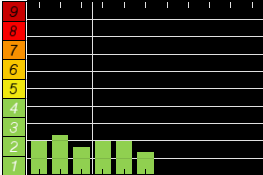
Текущее состояние ионосферы:
|
||||||||||||||||





|
Прогноз авроры в северном полушарии 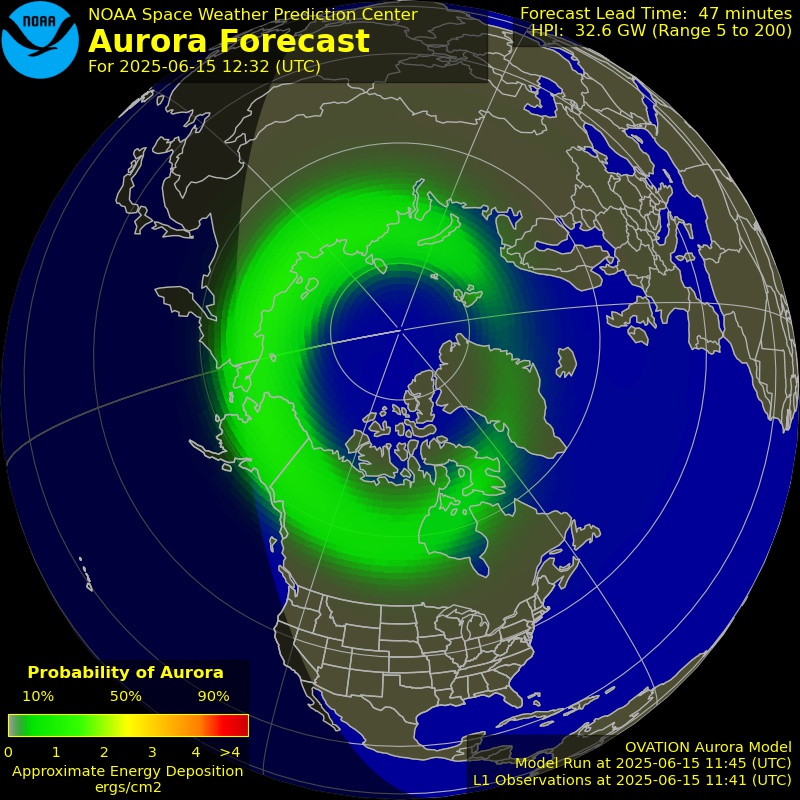
|
Прогноз УКВ 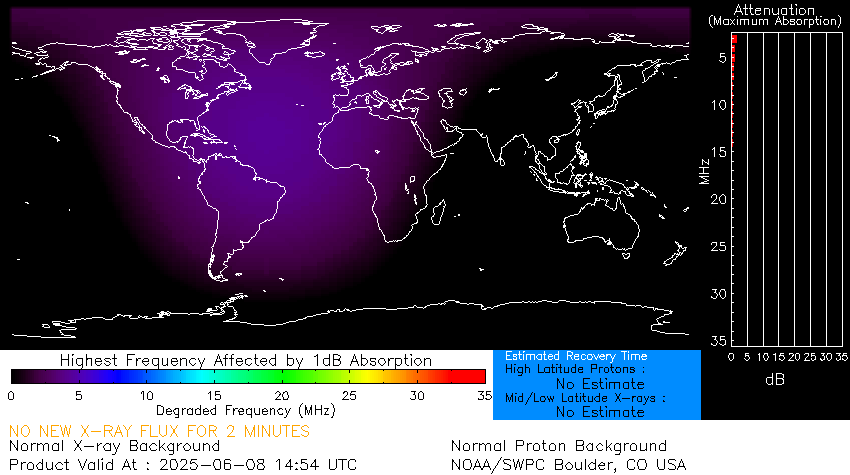
|
Прогноз сервера SIDC.BE: (Правила перевода)
Опубликовано: 03 июня 2026 в 1236 UTC
SIDC URSIGRAM 60603
Состояние солнечной активности на 03 июня 2026, 1235UT
Прогноз SIDC
Солнечные вспышки. Ожидаются вспышки класса M (вероятность >=50%)
Геомагнитное поле: Возмущенное (A>=20, K=4)
Солнечные протоны: Спокойное состояние
Прогноз на 03 июня 2026: Солнечный поток в диапазоне 10см: 149 / AP-индекс: 015
Прогноз на 04 июня 2026: Солнечный поток в диапазоне 10см: 151 / AP-индекс: 015
Прогноз на 05 июня 2026: Солнечный поток в диапазоне 10см: 153 / AP-индекс: 059
Комментарий (автоматический перевод с английского с помощью Яндекс.Переводчика):
Области солнечной активности и вспышки на Солнце: За последние 24 часа активность солнечных вспышек была высокой. Была зафиксирована 1 вспышка класса X и 3 вспышки класса M. В настоящее время на диске имеется 10 пронумерованных областей. Самой крупной вспышкой была вспышка X1.0 (SIDC flare 7842), пик которой пришелся на 11:28 UTC 03 июня, согласно измерениям GOES-19. Снимок был сделан SIDC Sunspot Group 860 (NOAA Активная область 4455), которая усложнилась и имеет бета-гамма магнитный тип. Этот регион был ответственен за все вспышки класса М, включая вспышку M9.3 (вспышка SIDC 7838), пик которой пришелся на 03 июня в 01:36 UTC, которое было связано с радиоизлучением типа II и типа IV, а также вспышкой M7.7 (вспышка SIDC 7840) в 07:00 UTC 03 июня с радиоизлучением типа II. Группы солнечных пятен 886 и 887 (активные области NOAA 4458 и 4459) также увеличились за этот период и имеют магнитный тип бета. На диске появилась новая область , расположенная на северо-востоке и получившая название SIDC Sunspot Group 890 (Активный регион NOAA 4462). Остальные регионы являются простыми и в основном тихими. Ожидается, что в течение следующих 24 часов активность солнечных вспышек будет умеренной , ожидаются вспышки класса С и вероятны вспышки класса М с вероятностью вспышек класса Х.
Выбросы корональной массы: Были замечены множественные выбросы корональной массы (CME) , связанные со вспышками класса M в группе солнечных пятен SIDC 860 (Активная зона NOAA Область 4455). На диске были замечены затемнения, связанные со вспышками M1.2 и M3.3 (вспышки SIDC 7825 и 7826) 02 июня. Однако из-за одновременных выбросов CME на конечностях и задней поверхности эти сопутствующие выбросы CME трудно обнаружить на коронографических изображениях, и анализ продолжается. Слабый выброс корональной массы в гало был обнаружен в SOHO LASCO-C2 и виден STEREO-A COR2, начиная с 03 июня в 01:53 UTC. Этот CME был связан со вспышкой M9.3 (вспышка SIDC 7838) и вторым частичным CME в ореоле. (направленный на северо-запад) был обнаружен в SOHO LASCO-C2 в 07:58 UTC 03 июня. Этот CME был связан со вспышкой M7.7 (вспышка SIDC 7840), пик которой пришелся на 07:00 UTC 03 июня. Моделирование этих событий продолжается , но первоначальные оценки указывают на возможное первое появление этих событий на 05 июня. Любые возможные CME, связанные со вспышкой X1.0, будут проанализированы по мере поступления данных.
Солнечный ветер: За последние 24 часа параметры солнечного ветра отражали условия слабого солнечного ветра. Скорость солнечного ветра немного увеличилась с от 400 до 450 км/с. Общее магнитное поле колебалось от 6 до 10 нТл и демонстрировало некоторые возможные переходные явления с 03:30 UTC 03 июня. В Bz было минимум -5 нТл. Угол наклона межпланетного магнитного поля phi был в основном в отрицательном секторе (направлен в сторону Солнца). Усиление скорости солнечного ветра и магнитного поля ожидается 03 и 04 июня из-за CIR и высокоскоростного потока, связанного с корональной дырой положительной полярности , которая начала пересекать центральный меридиан 31 мая (корональная дыра SIDC 166).
Геомагнетизм: Геомагнитные условия были от спокойных до неустойчивых на глобальном и местном уровнях (NOAA Kp и Kbel 1-3). В течение следующих 24 часов возможны активные условия с возможными небольшими интервалами между штормами из -за возможного влияния высокоскоростных потоков.
Уровни потока протонов: За последние 24 часа поток протонов с энергией более 10 МэВ был ниже порогового значения в 10 бое. Ожидается , что в течение следующих 24 часов он будет оставаться ниже этого порогового уровня.
Потоки электронов в GEO: Поток электронов с энергией более 2 МэВ, измеренный GOES-19, ненадолго превысил порог в 1000 бое и достиг максимального значения 3421. Ожидается, что поток электронов, превышающий 2 МэВ, будет повышенным, но ниже этого порогового значения в течение следующих 24 часов. Поток электронов был на нормальном уровне и, как ожидается, будет на нормальном уровне в течение следующих 24 часов.
Сегодняшнее значение числа солнечных пятен (International Sunspot Number): 139,
получено на основе анализа результатов 14 станций наблюдения.
Солнечные индексы за 02 Jun 2026
Число Вольфа по данным обсерватории Катания (IT9): ///
Солнечный поток в диапазоне 10см: 146
A-индекс по данным обсерватории Chambon-la-Foret (F): 015
A-индекс по данным обсерватории Wingst (DL): 008
Планетарный А-индекс Ap: 007
Вчерашнее значение числа солнечных пятен (International Sunspot Number): 125,
получено на основе анализа результатов 21 станций наблюдения.
Прошедшие события на Солнце:
DAY BEGIN MAX END LOC XRAY OP 10CM Catania/NOAA RADIO_BURST_TYPES
02 0442 0445 0447 ////// M1.2 ///4461
02 0951 1005 1019 N11E01 M1.2 1N 37/4455 VI/2
02 1631 1650 1656 N56W29 M3.3 2 37/4455 III/2II/2
03 0122 0136 0143 N13W11 M9.3 SF 37/4455
03 0649 0700 0707 N16W13 M7.7 2B 37/4455 III/2II/3
(Прогноз бельгийского сервера SIDC - Правила перевода)
|
SAF = Прогноз солнечной активности. Показания индекса К снимаются с интервалом
в три часа. Они показывают текущий уровень активности магнитного
поля Земли (в данном случае записаны в городе Boulder, штат Colorado).
Обратите внимание, что это данные могут не соответствовать той географической
зоне, в которой вы находитесь, однако являются в определенной степени
усредненными. |
Состояние магнитного поля:
(Прогноз российской лаборатории "ИЗМИРАН")
(Прогноз российской лаборатории "ИЗМИРАН")
Рекомендованные статьи о солнечной активности:
- Ионосфера и ее изучение
- О сверхдальнем распространении на КВ
- Прогноз рабочих частот делаем самостоятельно
- Прогноз тропосферного прохождения
- Сверхдальние QSO: оптимальные направления и периоды
- Прохождение на КВ диапазонах
- Снова сверхдальняя радиосвязь
- Как сделать прогноз прохождения
- Стоит ли повышать мощность?
- СНЭРА: прогнозирование радиоавроры
- О дальнем и сверхдальнем распространении
коротких волн
- Эхо магнитных бурь
- Опасаться или не обращать внимания
- Явления влияющие на прохождение радиоволн